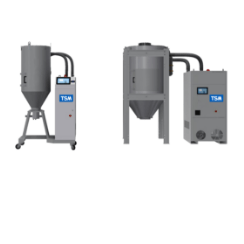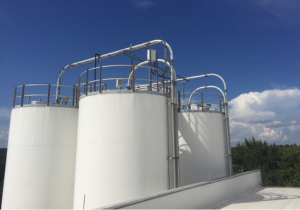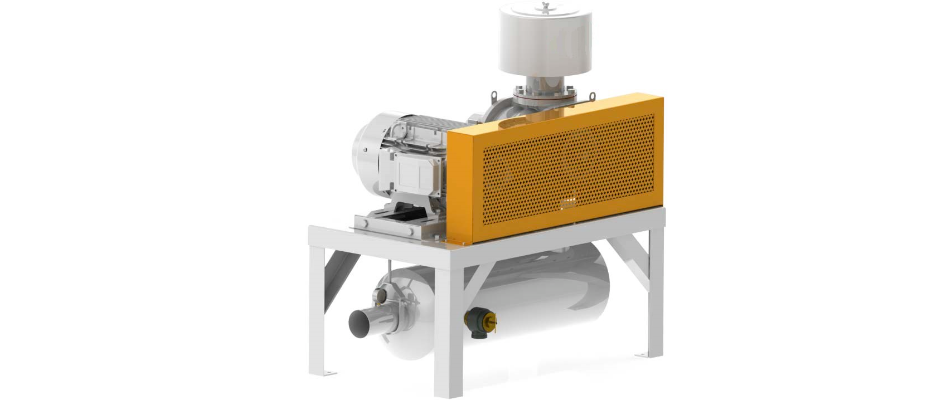
Conveying, Treatment & Storage Equipment

TSM has 45 years of experience in Conveying, Treatment & Storage equipment within the plastics industry. As an innovative firm, TSM delivers concrete solutions for material handling and storage, conveying systems, material pre-treatment, and material unloading equipment.

Material Handling Solutions


TSM is one of the world’s leading providers of Conveying, treatment & storage solutions, whether that is the case for; Blown Film, Cast Extrusion, Sheet Extrusion, Extrusion Coating, Bopp Extrusion, Wire & Cable Extrusion, Compounding Line, Multifilament Line (Fiber), Pipe & Profile Extrusion, Blow Molding & ISBM and Injection Molding. 
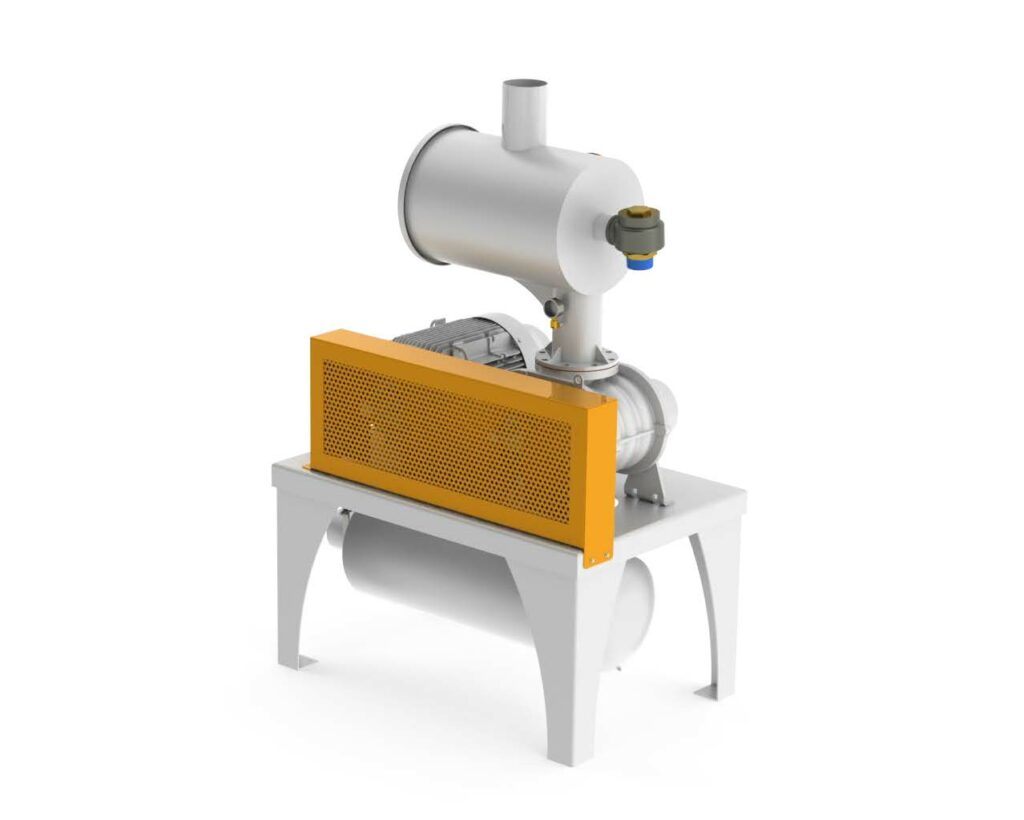
We offer Design Flexibility by providing custom solutions to fit specific material handling, conveying, treatment, and storage needs, tailored to industry requirements, space constraints, and operational goals. Our Integration with Existing Systems ensures that our equipment can be designed to seamlessly work with your current processes, guaranteeing a smooth transition and maximizing efficiency. Additionally, we maintain Compliance with Standards, as all our customized specifications adhere to relevant safety and industry standards, ensuring robust, safe, and efficient operations.

Our solutions are equipped with Intuitive Controls for All Users, ensuring ease of use in operating conveyors, treatment mechanisms, or storage systems for both manual and automatic handling. The Versatility in Operations allows you to select between manual control for hands-on engagement or automatic handling for streamlined operation, catering to different materials and handling requirements. Additionally, Training and Support are Included with our offerings. We provide comprehensive training on how to handle the equipment safely and efficiently, ensuring that your team can get the best out of the systems.

We prioritize Energy-Efficient Equipment in our conveying, treatment, and storage solutions, designing them for optimal energy efficiency, which minimizes operational costs over the equipment’s lifespan. Our focus on Minimal Maintenance Requirements, achieved through robust construction and quality materials, means less time and money spent on maintenance, effectively lowering the overall cost of ownership. Additionally, we offer Cost-effective Warranty Options, providing various warranty and support packages that align with your budget. This ensures protection for your investment without the burden of unexpected expenses.

Our conveying, treatment, and storage equipment offers Quick and Simple Setup, designed for straightforward installation with guides and support readily available to ensure a smooth process. Should you require specialized assistance, we have Professional Installation Services Available to make the implementation of your new systems as hassle-free as possible. Additionally, our support team offers Technical Support Throughout Installation, being on hand to provide assistance and answer any questions during the installation phase, ensuring everything is set up for optimal performance.

Range of Conveying, Treatment & Storage Equipment

Applications

Why Choose TSM Control Systems as your Conveying, Treatment & Storage Equipment Provider.

Contact us now to discuss your material handling & storage needs.

CONTACT TSM

FAQs

Do I need a stand-alone loader or a central system?
If you have one machine and one material, a stand-alone loader can be enough. If you have multiple machines, frequent changes, longer distances, multiple materials, or you want reporting/traceability, a central system typically becomes more efficient and scalable. Send a simple plant layout and material list and TSM will recommend the right approach.
Why do pellets degrade, create angel hair or block?
Common causes include excessive conveying velocity, long conveying distances, sharp bends, worn pipework, excessive dust/fines generation, or unsuitable filtration/receiver setup. The fix is usually correct system sizing (vacuum source, pipe diameter), routing, and proper filtration/receiver design. If you share distances, material type, and the issue (angel hair, fines, blockages), TSM can diagnose likely root causes.
How long should drying take before processing?
Drying time depends on resin type, moisture content, temperature, airflow, and required residence time. TSM drying solutions support industrial drying performance (including high temperature capability and low dew point), but the correct drying recipe must match the resin supplier specification. Share the polymer type and throughput and TSM will advise drying time and sizing.
How do I prevent cross-contamination between color or material changes?
Cross-contamination is usually driven by retention in receivers, hoses, pipework, filters, and dead legs. Best practice includes minimizing retention points, correct purge procedures, accessible receiver/filter clean-out, and system design that supports frequent changes. Tell us how often you change materials/colors and your scrap tolerance, and we’ll propose a layout and procedure.
How do I size a loader or central conveying system for my line rate?
You size for peak demand: kg/hr, conveying distance, elevation, number of pick-up points, material type (pellet vs powder vs flake), and duty cycle. Provide those inputs and TSM will size vacuum source, pipework, receivers, and filtration to meet your line rate reliably.
Can a conveying system handle flake, powders, and be reliably?
Yes, if designed correctly. Flake and powders typically need specific receiver/filtration strategies and careful airflow/velocity control to prevent blockages and excessive fines. Share the material form, dust load, and rate and TSM will confirm the right configuration.
How do I choose the right filter type?
Filter choice depends on dust/fines load, material type, conveying frequency, and maintenance preference. Incorrect filtration often causes either blockages/flow restriction or excessive dust carryover and maintenance. If you share your material and conveying duty, TSM will recommend the appropriate filter type and cleaning approach.
Can my conveying system integrate with my blender, dryer, extruder or ERP?
Yes, integration is often achievable, especially for demand signals, recipe/material selection, alarms and reporting. The exact scope depends on your PLC/ERP/MES platform and what you want logged. Share your architecture and TSM will define the practical integration route.
Can I retrofit drying or conveying upgrades to my existing line?
In many cases, yes. Retrofits can range from replacing receivers/filters to upgrading controls, adding drying capacity, or converting from line-side to central systems. Send your current equipment list and layout and TSM will propose a phased upgrade path.
What information do I need to get a quote for a conveying or drying layout?
Materials and forms, kg/hr per line, number of machines/receivers, distances/elevations, changeover frequency, dust load, desired automation level, floor plan, and any constraints (height, access, ATEX/safety). With that, TSM can quote equipment and provide a proposed layout.
Can the system log material usage for QA or traceability?
Yes, logging is possible, but the exact data set and retention depend on the control platform and integration scope. If you share your QA/traceability requirements (what you must prove and for how long), TSM will confirm what can be logged/exported and how.